What This Means for Your Organization:
- According to Splunk, around 98% of cyberattacks rely on social engineering methods such as phishing.
- 83% of businesses have fallen prey to phishing attacks with more than half of the company's employees not even knowing what phishing is.
- With training, most phishing attacks can be avoided by understanding the common red flags.
What Is Social Engineering in Terms of Cybersecurity
To help understand what phishing is, we need to first understand Social Engineering. Social engineering is known as "people hacking." This involves deceiving people, not computers, into giving up private or corporate information, or acting in ways that are beneficial to attackers. These scams can range from simple password requests to more intricate methods that use public information to establish credibility or even leave infected USB devices lying around. Manipulation of humans is the objective. Artificial intelligence has made this even more difficult. With the use of AI-powered technologies like deepfakes and convincing voice mimicking, attackers can now produce remarkably accurate impersonations, making it more difficult than ever to identify these tactics.
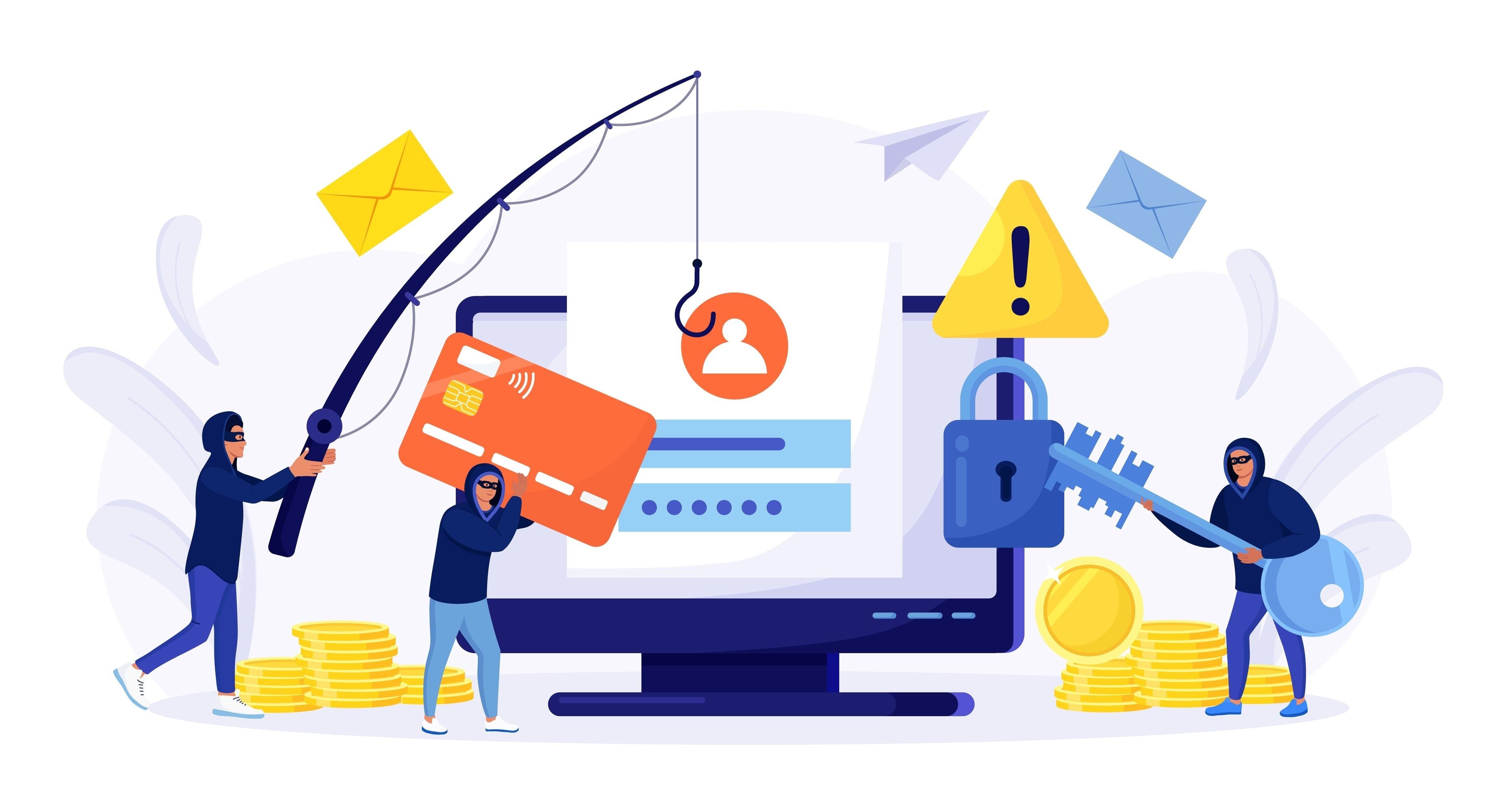
Attackers use phishing techniques in various ways to socially engineer their way into someone’s account. The main techniques for phishing are:
| Phishing Technique | How it Works |
|---|---|
| Email phishing | Email phishing includes broad access attempts, something like a fake password reset email from an email posing as Microsoft or Amazon |
| Spear phishing | You could receive spoofed emails from your IT department asking for your login credentials with an email that looks very similar to the real deal. |
| Whaling attacks | Whaling attacks target higher-up positions at businesses. CEOs, for example, are heavily targeted by using emails from fake co-worker addresses. |
| Vishing | Vishing is done through phone calls, think of spam calls pretending to be your bank for example. Newer forms of vishing use AI to replicate your bosses or a loved ones voice to reel you in. |
| Smishing | Smishing, similar to vishing, uses text messages to try to convince you to hand over your credentials. Another form of modern smishing would be the use of AI with deepfakes to generate videos of your boss leaving you a recorded message to send him sensitive information. |
While there are many techniques of phishing, they all share one key commonality. They use urgency to reel you in and make it seem like you absolutely have to respond. The sense of urgency is used to pressure you and essentially override your thinking process. There are many red flags when it comes to phishing attempts but attackers hope your brain shuts down due to the urgency and stress this causes. Attempts will use phrases like “take action immediately” as a scare tactic to get the victim to click on malicious links, download malicious files, or provide sensitive information.
How Can You Protect Yourself and Your Business from These Types of Attacks?
The primary and most important form of protection against these attacks is informing yourself and your team about these threats. Most phishing attacks can be avoided by understanding these common red flags:
- Suspicious Senders: Check for unknown sender, generic domains such as “@gmail.com,” or misspellings in the sender’s name or email address that tries to look like a legitimate source.
- Urgency and Panic: Be aware of messages that ask for immediate actions trying to scare you into accepting something, sharing data, or entering your passwords.
- Suspicious Email Content: Look out for fake or shortened links that redirect you to password grabbing sites, as well as poor grammar and spelling. Usually the threat actors don’t have the identical email look when posing as Microsoft for example, so things can seem off.
- Requests for Access to Sensitive Data: Many phishing attempts request access to specific data that you are in control of and impersonation is often used.
- Unusual Calls or Texts: Employees should be educated that they will not be contacted by phone or text to ask for credentials.
By providing an annual employee training program, companies can reduce their risk of human error in phishing schemes. In addition, by implementing a strong email security system, companies will also greatly reduce the amount of phishing emails coming into your businesses email accounts.
Total Assure can simplify cybersecurity, reduce risk, and help get you back to focusing on what you do best: running your business. Are you ready to strengthen your cybersecurity without the stress? Schedule your free consultation with Total Assure today.
About Total Assure
Total Assure, a spin-off from IBSS, provides uninterrupted business operations with our dedicated 24/7/365 in-house SOC, robust managed security solutions, and expert consulting services. Total Assure provides cost-efficient, comprehensive, and scalable cybersecurity solutions that leverage 30 years of experience and expertise from IBSS. Total Assure partners with its customers to identify security gaps, develop attainable cybersecurity objectives, and deliver comprehensive cybersecurity solutions that protect their businesses from modern cybersecurity threats.
For more information on how Total Assure can assist your organization, contact our team.